
EU Buildings Directive 2024: A Long Signal for Insulation and Glass
The recast EU buildings directive of April 2024 sets zero-emission new buildings from 2030 and renovation targets that lift insulation and glazing demand.
The law that passed in 2024
The recast Energy Performance of Buildings Directive, Directive (EU) 2024/1275, was signed on 24 April 2024 and entered into force on 28 May 2024. Member States have until 29 May 2026 to transpose most of it into national law. The starting point is simple: according to the European Commission, buildings use around 40% of the energy consumed in the EU and account for around 50% of EU gas consumption, while the annual energy renovation rate is only about 1%.
Zero-emission new buildings
The directive replaces the current nearly zero-energy standard with a stricter zero-emission building standard. All new buildings owned by public bodies must be zero-emission from 1 January 2028, and all other new buildings from 1 January 2030, with limited exemptions. A zero-emission building has no on-site carbon emissions from fossil fuels and a very high energy performance, with its small remaining energy need covered mainly by renewable sources. New buildings must also be solar-ready, and solar installations will gradually become the norm.
Renovation targets for existing stock
The bigger market is the existing stock. For non-residential buildings, minimum energy performance standards will trigger renovation of the 16% worst-performing buildings by 2030 and the 26% worst-performing by 2033. For homes, each Member State sets a national trajectory to cut average primary energy use by 16% by 2030 and by 20% to 22% by 2035, with at least 55% of the reduction coming from renovating the worst-performing buildings. Countries submit draft national building renovation plans by the end of 2025. Financial incentives for stand-alone fossil fuel boilers must end from 1 January 2025.
Why this matters for insulation and glass
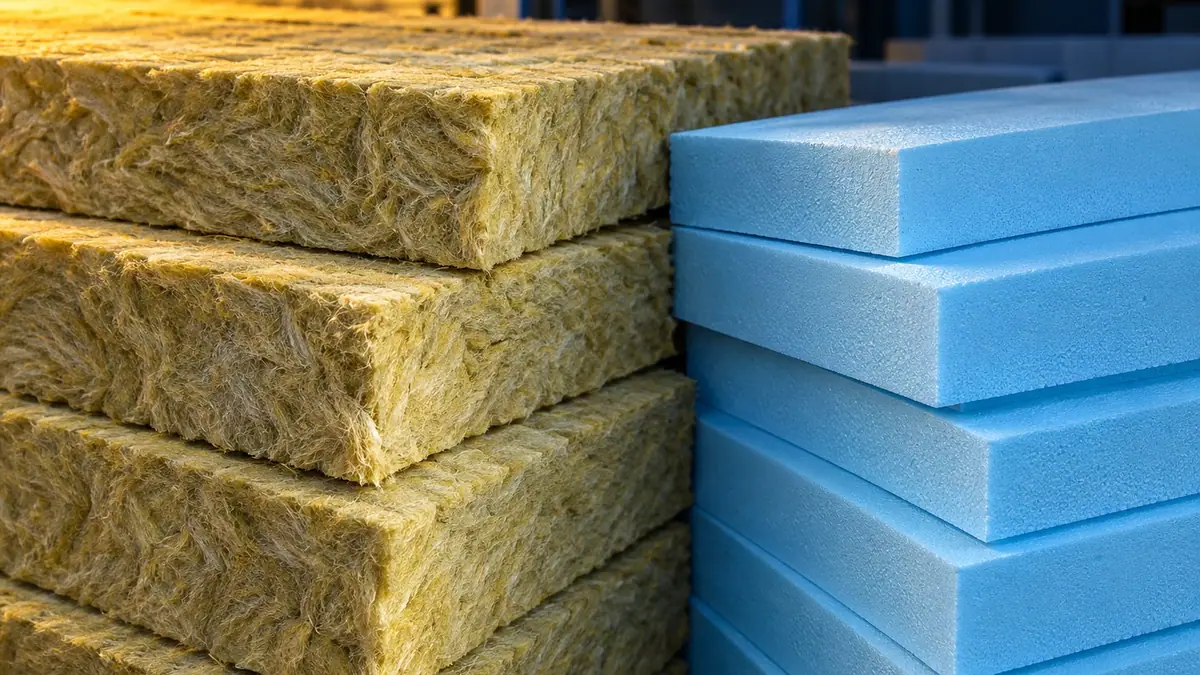
The Commission lists insulation and windows first among the measures that improve a building's energy performance, next to efficient heating and cooling systems and renewable energy. Reaching 16% lower average primary energy use in homes within six years, while focusing on the worst buildings, means a large volume of facade, roof and floor insulation and window replacement. Deep renovation is expected to bring buildings to zero-emission standard after 2030. That points to sustained demand for mineral wool, EPS and XPS boards, insulated panels, double and triple glazing and low-emissivity coated glass across EU markets.
Timing matters. The directive sets a direction, but national rules, funding and building permits decide when orders actually appear. Most of the volume will follow transposition in 2026 and the national renovation plans, not the 2024 adoption itself.
What suppliers and traders should prepare
- Check that products carry the right CE marking and declarations of performance under EU harmonised standards. Renovation projects with public funding check documents closely.
- Prepare thermal data such as lambda values for insulation and U-values and g-values for glazing units. Specifiers use them in energy performance certificates.
- Expect demand for environmental product declarations, since the recast also brings in life-cycle global warming potential reporting for new buildings.
- Follow transposition country by country. Renovation demand will grow first where national plans and subsidies start earliest.
- For importers outside the EU, the same standards often spread to neighbouring markets that follow EU construction rules.
A slow but long cycle
The 2024 recast does not create a sudden spike in orders. It builds a long cycle of renovation demand through 2030 and 2033 milestones and beyond. Traders of insulation and glass who line up compliant products, test data and reliable supply early will be better placed when national programmes turn those targets into tenders.
